|
| Insurance
Fraud
Hurts
Everyone |
|
|
|
There
is
no
such
thing
as
a
little
fraud
There
are
big
lies
and
little
lies,
but
insurance
fraud
can
be
anything
from
claiming
two
or
three
extra
CD’s
being
stolen
from
your
car,
to
claiming
large
sums
of
tools
stolen
from
your
garage,
to
falsifying
an
injury
in
order
to
collect
weekly
indemnity
benefits.
Each
year,
insurance
fraud
costs
Canadians
$3
billion.
That
means
10
to
15
cents
of
every
dollar
you
pay
as
premium
is
used
to
cover
fraudulent
insurance
claims.
Insurance
fraud
really
does
cost
everyone.
Insurance
fraud
costs
all
of
us
in
the
form
of
higher
premiums.
If
someone
you
know
is
committing
insurance
fraud
on
a
home,
car
or
business
policy,
you
can
report
it
to
CrimeStoppers
at
1-800-222-TIPS.
If
your
tip
helps
the
police
or
your
insurance
company
catch
an
insurance
fraud,
you
may
be
eligible
for
a
cash
reward
–
your
call
will
remain
completely
anonymous.
|
|
|
Common
types
of
fraud
or
attempted
fraud
include:
|
- Lying
about
the
way
a
loss
occurred.
- Adding
items
or
inflating
the
value
items
in
a
claim.
- Filing
fraudulent
automobile
accident
or
damage
claims
(i.e.
including
previously
existing
damage
when
submitting
a
claim).
- Withholding
information
about
past
accidents,
traffic
convictions,
claims,
policy
cancellations
or
non-renewals.
- Receiving
payments
for
treatments
not
received.
|
|
|
|
If
you
are
caught
committing
or
attempting
to
commit
insurance
fraud:
|
- Your
claim
will
be
denied.
- Your
insurance
policy
may
be
cancelled
outright.
- You
may
pay
higher
premiums
in
the
future.
- You
may
be
denied
insurance
in
the
future.
- More
importantly,
the
offense
is
punishable
on
conviction,
by
a
maximum
of
10
years
imprisonment
for
cases
involving
an
amount
over
$5,000
or
otherwise
a
maximum
of
2
years
imprisonment.
|
|
|
|
Return
to
top
|
|
|
| New
School
Bus
Safety
Legislation |
|
|
|
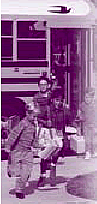 Over
800,000
young
people
are
transported
safely
in
school
buses
every
day.
Unfortunately,
accidents
still
happen.
Most
occur
as
students
are
boarding
or
leaving
the
bus
when
they
are
crossing
the
street. Over
800,000
young
people
are
transported
safely
in
school
buses
every
day.
Unfortunately,
accidents
still
happen.
Most
occur
as
students
are
boarding
or
leaving
the
bus
when
they
are
crossing
the
street.
Ontario
recently
passed
legislation
that
allows
police
charge
the
OWNER
of
any
vehicle
that
illegally
passes
a
stopped
school
bus.
This
means
it
is
the
owner’s
responsibility
to
make
sure
everyone
using
their
vehicle
is
aware
of
this
legislation.
Motorists
are
required
by
law
to
stop
for
a
school
bus
with
its
upper
reds
lights
flashing.
This
applies
to
city
streets,
highways
or
county
roads
regardless
of
speed
limit
or
number
of
lanes.
Motorists
traveling
in
both
directions
must
stop.
The
only
exception
is
on
highways
separated
by
a
median.
In
this
situation,
traffic
coming
from
the
opposite
direction
is
not
required
to
stop.
Motorists
must
not
start
moving
until
the
red
lights
have
stopped
flashing
and
the
bus
begins
to
move.
Penalties
for
not
stopping
for
a
school
bus
can
be
as
high
as
$2,000
and
six
demerit
points
for
the
first
offense.
With
your
help,
we
can
all
help
keep
our
roads
and
our
children
safe.
|
|
Return
to
top
|
|
|
|
|
|
|
|
New
rules
limit
the
number
of
passengers
you
can
carry
Ontario’s
Graduated
Licensing
System
has
been
a
huge
success
in
reducing
death
and
injury
among
novice
drivers.
Research
shows
that
teenage
drivers
are
almost
three
times
more
likely
to
be
involved
in
a
fatal
or
serious
collision
when
they
are
carrying
teenage
passengers.
In
fact,
the
more
teenage
passengers,
the
higher
the
risk.
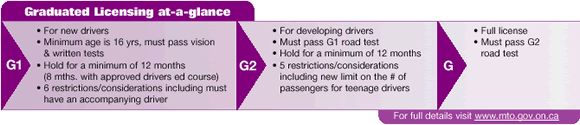
G2
License
Rule
changes
To
keep
Ontario’s
roads
safer,
new
restrictions
were
introduced
on
September
1,
2005
that
limit
the
number
of
young
passengers
a
teen-aged
G2
driver
can
carry
from
midnight
to
5
a.m.
- For
the
first
6
months,
G2
drivers
19
or
under
can
carry
only
one
passenger
aged
19
or
under.
- After
6
months,
a
G2
driver
can
carry
up
to
three
passengers
aged
19
or
under.
These
restrictions
do
not
apply
if:
- The
G2
driver
is
accompanied
by
a
full
“G”
licensed
driver
(with
at
least
4
years
driving
experience)
in
the
front
seat.
- The
passengers
are
immediate
family
members.
- The
driver
turns
20
years
old.
- The
driver
earns
a
full
G
license.
In
addition,
G2
drivers
must
maintain
a
zero
blood
alcohol
level
while
driving
and
never
carry
more
passengers
than
the
number
of
working
seat
belts
in
the
vehicle.
|
 |
|
Return
to
top
|
|
|
| Wow!
Over
4
inches
of
rain
in
one
hour |
|
|
|
|
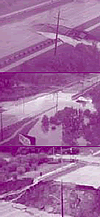
On
August
19,
2005,
103mm
(4
inches)
of
rain
fell
in
a
one-hour
period
in
Toronto
and
parts
of
Southern
Ontario.
The
$100
million
storm
caused
massive
flooding
and
damage
to
5,200
homes
and
700
automobiles.
A
section
of
Finch
Avenue,
a
four-lane
road
in
North
York
was
completely
washed
out
(see
photos,
left)
and
will
cost
an
estimated
$5
million
to
repair.
While
storms
of
this
magnitude
are
rare,
you
can
be
sure
they
will
occur
again
at
some
point
in
the
future.
If
you
live
in
an
area
prone
to
flooding,
be
prepared.
-
Clear
leaves
and
other
debris
from
eaves
troughs,
downspouts
and
catch
basins
to
allow
proper
drainage.
- In
extreme
downpours,
even
clear
eaves
troughs
can
overflow.
Make
sure
the
grading
around
your
home
drains
away
from
all
exterior
walls,
window
wells
and
other
openings.
- Keep
drinking
water,
canned
food,
flashlights,
spare
batteries,
a
first
aid
kit,
and
a
transistor
radio
in
your
home.
If
you
are
caught
in
a
storm
while
driving,
watch
out
for
flooded
roadways,
especially
low
spots
like
underpasses.
If
you
encounter
a
flooded
underpass,
do
not
attempt
to
drive
through
it
–
take
an
alternative
route
instead.
Severe
weather
can
strike
at
anytime.
A
little
preparation
now
will
serve
you
well
in
an
emergency.
|
|
Return
to
top
|
|
|
| When
Do
I
Insure
My
New
Home? |
|
|
|
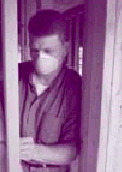 Are
you
planning
to
build
your
dream
home
soon
or
thinking
about
adding
an
addition
to
your
present
home? Are
you
planning
to
build
your
dream
home
soon
or
thinking
about
adding
an
addition
to
your
present
home?
For
your
protection,
you
must
advise
us
about
your
plans
before
you
start
construction.
You
will
be
required
to
insure
for
the
full
replacement
value
of
the
project.
This
may
take
the
form
of
an
endorsement
or
“course
of
construction”
extension
to
your
current
policy,
or
may
require
an
entirely
new
policy.
If
you
are
going
to
act
as
your
own
general
contractor,
you
may
be
charged
a
higher
premium
for
the
increased
exposure.
You
will
also
be
asked
to
obtain
proof
of
insurance
from
any
subcontractors
performing
work
for
you.
Some
insurers
may
request
a
higher
deductible
during
the
construction
phase.
These
can
be
exciting
and
hectic
times.
If
you
have
any
questions,
please
call
us.
We’re
here
to
help.
|
|
Return
to
top
|
|
|
|
|
|
|
In
Ontario,
there
are
12
different
license
classes.
Each
one
qualifies
you
to
drive
a
different
type
of
vehicle.
The
class
of
license
you
have
must
match
the
type
of
vehicle
you
are
driving.
A
“G”
class
license
is
the
most
common
in
Ontario
and
allows
you
to
drive
any
car,
van
or
small
truck
or
combination
of
vehicle
and
towed
vehicle
up
to
11,000kg,
provided
the
vehicle
being
towed
is
not
over
4,600kg.
For
people
who
tow
large
camper
trailers,
travel
trailers
or
5th
Wheel
trailers,
it
is
possible
to
exceed
the
weight
restrictions
of
a
G
license.
If
your
trailer
exceeds
4,600
kg
or
if
the
total
weight
of
your
tow
vehicle
and
trailer
exceeds
11,000
kg,
you
will
be
in
violation
of
the
G
class
rules
and
in
effect,
will
be
driving
without
a
license.
Without
a
valid
license,
your
insurance
may
be
null
and
void
in
the
event
of
an
accident
or
claim.
If
your
tow
vehicle
and
trailer
combination
exceeds
the
weight
limit,
you
should
obtain
a
A
class
license.
|
|
Return
to
top
|
|
|
| New
rules
when
approaching
a
stopped
emergency
vehicle |
|
|
|
If
you
see
an
emergency
vehicle
(police
car,
ambulance,
or
fire
vehicle)
stopped
with
its
red
lights
flashing
on
your
side
of
the
road
or
highway,
you
must
slow
down
and
pass
with
caution.
If
the
road
has
two
or
more
lanes,
you
now
must
move
over
into
another
lane,
if
it
can
be
done
safely.
Failing
to
do
so
can
result
in
fines
up
to
$2,000
plus
3
demerit
points
for
the
first
offence.
Subsequent
offences
within
5
years,
can
result
in
fines
up
to
$4,000,
up
to
6
months
jail
time,
and
a
possible
2
year
suspension
of
your
driver’s
license.
As
always,
if
you
see
or
hear
an
emergency
vehicle
approaching
from
either
direction,
with
lights
flashing
or
siren
on,
you
must
clear
the
way
by
pulling
to
the
right,
and
if
possible,
stop
to
let
it
pass.
|
|
Return
to
top
|
|
|
| Making
Ontario’s
Roads
Safer
for
Children |
|
|
|
New
Child
Booster
Seat
Legislation
You
would
never
think
of
dropping
a
child
from
a
third
story
window,
but
in
a
50
km/hr
car
crash,
an
unrestrained
child
would
suffer
similar
injuries.
 According
to
the
Canadian
Hospitals
Injury
Reporting
and
Prevention
Program,
motor
vehicle
collisions
are
the
leading
cause
of
death
and
injury
among
children
and
youth. According
to
the
Canadian
Hospitals
Injury
Reporting
and
Prevention
Program,
motor
vehicle
collisions
are
the
leading
cause
of
death
and
injury
among
children
and
youth.
Recently,
the
Ontario
government
passed
legislation
making
our
roads
and
highways
even
safer
for
children.
Studies
have
shown
that
children
using
seat
belts
instead
of
booster
seats
are
3.5
times
more
likely
to
suffer
significant
injury,
and
4
times
more
likely
to
suffer
head
injury.
Now
it’s
the
Law!
All
children
under
the
age
of
eight
and
weighing
between
18
and
36
kg
(40-80lbs)
must
use
booster
seats.
A
child
can
start
using
a
seatbelt
alone,
once
any
one
of
the
following
criteria
is
met:
- The
child
turns
8
years
old;
- The
child
weighs
36
kg
(80
lbs);
or,
- The
child
is
145
cm
(4
feet
9
inches)
tall.
This
law
applies
to
all
drivers,
not
just
parents
and
legal
guardians.
Babysitters,
grandparents,
aunts,
uncles
or
anyone
travelling
with
young
children
are
required
to
follow
the
law
on
the
use
of
car
seats.
The
penalty
for
failing
to
comply
is
a
$90
fine
plus
a
$20
victim
surcharge
and
2
demerit
points.
|
|
Return
to
top
|
|
|
| Things
Change!
So
Can
Your
Liability. |
|
|
|
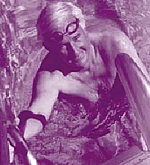 As
the
nice
weather
approaches
our
thoughts
turn
to
getting
back
outdoors.
Maybe
this
is
the
year
you
invest
in
a
family
swimming
pool. As
the
nice
weather
approaches
our
thoughts
turn
to
getting
back
outdoors.
Maybe
this
is
the
year
you
invest
in
a
family
swimming
pool.
If
you
are
considering
such
an
investment
or
have
already
added
one,
please
let
us
know.
A
new
swimming
pool
often
increases
the
value
of
your
home,
but
it
also
changes
your
insurance
risk
with
respect
to
the
liability
portion
of
your
homeowner’s
policy.
A
swimming
pool
can
be
fun
for
the
entire
family
as
well
as
friends
and
guests,
but
they
can
be
dangerous.
Some
insurance
companies
charge
a
nominal
fee
to
protect
you
against
any
lawsuits
that
may
arise
from
the
use
–
or
misuse
–
of
your
pool.
Whether
you
add
a
swimming
pool,
a
trampoline
or
anything
else
that
could
increase
the
risk
of
injury,
make
sure
we
adjust
your
liability
coverage
accordingly.
Don’t
be
left
exposed.
If
you
are
not
sure,
call
us
today.
|
|
Return
to
top
|
|
|
| Be
Aware
of
Tow
Truck
Scams! |
|
|
|
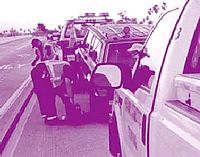 Most
tow
truck
operators
provide
a
fair
and
valuable
service
to
those
in
need.
However,
some
operators
have
made
side
deals
with
repair
shops
or
storage
facilities
that
pay
them
a
commission
for
bringing
in
your
vehicle.
Not
only
is
this
practice
unethical,
it
can
result
in
poor
quality
repairs
or
hefty
storage,
administrative
and
environmental
charges
if
you
decide
to
change
shops. Most
tow
truck
operators
provide
a
fair
and
valuable
service
to
those
in
need.
However,
some
operators
have
made
side
deals
with
repair
shops
or
storage
facilities
that
pay
them
a
commission
for
bringing
in
your
vehicle.
Not
only
is
this
practice
unethical,
it
can
result
in
poor
quality
repairs
or
hefty
storage,
administrative
and
environmental
charges
if
you
decide
to
change
shops.
If
your
vehicle
is
not
drivable
after
being
involved
in
an
accident,
have
the
tow
truck
operator
take
it
to
a
Collision
Reporting
Centre
(CRC),
if
one
is
available
in
your
area.
The
centre
will
pay
the
towing
bill
on
your
behalf
and
provide
24
hours
FREE
storage.
Your
insurance
company
will
then
authorize
a
damage
appraisal
and
arrange
to
have
your
vehicle
towed
to
a
repair
facility
of
your
choice.
If
a
tow
truck
operator
promises
you
a
free
courtesy
car,
additional
bodywork
at
no
cost,
or
offers
to
pay
your
deductible,
you
are
likely
being
scammed.
To
avoid
being
a
victim,
Do
Not
Sign
a
Waiver
allowing
your
vehicle
to
be
towed
from
the
Collision
Reporting
Centre.
A
reputable
towing
company
will
never
ask
you
to
sign
a
waiver.
If
you
are
involved
in
an
accident,
call
us
as
soon
as
possible.
We’ll
answer
all
your
questions.
|
|
Do
Not
Sign
a
Waiver
allowing
your
vehicle
to
be
towed
from
a
Collision
Reporting
Centre
(CRC)
|
|
|
|
Return
to
top
|
|
|
|